Contractor Lead Generation Website Strategy for 2026: Local SEO, Google Business Profile, and Mobile UX
Contractors do not need more website traffic in the abstract. They need the right homeowner, in the right service area, on the right device, taking the next step without friction. That might be a call, a form submission, a click for directions, or a tap into a booking flow. If your site ranks, but the phone stays quiet, the problem is rarely just SEO. It is usually a mix of weak local signals, a neglected Google Business Profile, slow mobile pages, and a website that asks too much of a stressed homeowner.
That is the real frame for 2026. A contractor lead generation website has to do three jobs at once. It needs to help Google understand where you work and what you do. It needs to help prospects trust you quickly. It needs to make action easy on a phone screen while someone is standing in a wet basement, a dark kitchen, or a yard with a broken fence panel after a storm.
I have seen the same pattern across trades. A plumbing website design that looks modern but buries the phone number. An electrician website design with broad service copy that never makes the service area clear. A foundation repair website design with decent before-and-after photos but pages that take too long to load on mobile. A water damage restoration website design that forgets urgency and forces users through a long form when they just want immediate contact. The details differ, but the strategic fix is usually the same: align local visibility, business profile accuracy, and mobile usability around lead intent.
The website is not the whole system
A lot of contractors still think of the website as a digital brochure. That mindset leaves money on the table. Your site sits inside a larger local search system that includes your Google Business Profile for contractors, your service area setup, your reviews, your call handling, and the technical health of your pages.
Google makes it clear that a verified Business Profile helps customers find a business on Search and Maps, shows practical information like hours, phone number, and website, and can direct customers to a website, social profiles, booking links, and more. That matters because many local leads never start on your homepage. They start on the map pack, the business profile, or a branded search where your profile appears before the website gets a click.
If the profile is weak or inaccurate, your site has to work harder than it should. If the profile is strong but the website is clumsy, you still lose the lead after the click. The businesses that ask how to get more leads for contractors often assume they need a complete redesign first. Sometimes they do. Often, they need a system tune-up, not a total rebuild.
Start with service area reality, not vanity geography
Local SEO for home service businesses goes sideways when companies pretend they serve everywhere equally. Google’s guidance for service-area businesses is fairly practical. If you operate from one central office or location and serve customers at their locations, you can set up a service area. If you do not meet customers at your address, you should hide the address and use a phone number or website that represents that location. Google also recommends keeping service areas accurate and specific, and says they can be defined by cities, ZIP codes, or other places served.
That should shape both your profile and your website architecture.
A contractor who says, “We serve the whole state,” usually creates thin, vague pages that do not help customers or search engines. A better approach is to reflect the places you truly serve and can support operationally. There is no advantage in attracting calls from an area you will not drive to, or from a ZIP code where response times make you uncompetitive.
This is especially important in trades where urgency changes buyer behavior. Water damage restoration website design needs geographic clarity because response speed matters. Foundation repair website design often benefits from location specificity because homeowners want confidence that you actually serve their town and understand local conditions. Kitchen and bath remodeling website design may involve longer consideration cycles, but local credibility still carries the sale because homeowners prefer nearby firms they can reach and verify. The same is true for fence contractor website design and solar company website design, where buyers often compare several local options side by side.
The practical move is simple: build location relevance around your real service footprint. Do not manufacture dozens of nearly identical pages. Create useful location and service combinations only where they match the business.
Google Business Profile is not optional admin work
Too many contractors treat their profile as something to set up once and forget. In practice, it is one of the highest-leverage local assets you have.
A strong profile should accurately reflect your business details and line up with what appears on the website. For service-area contractors, the setup has to match how you actually operate. If customers do not visit your office, hide the address. If you serve distinct cities or ZIP codes, specify those areas accurately. If your hours change seasonally or during holidays, update them.
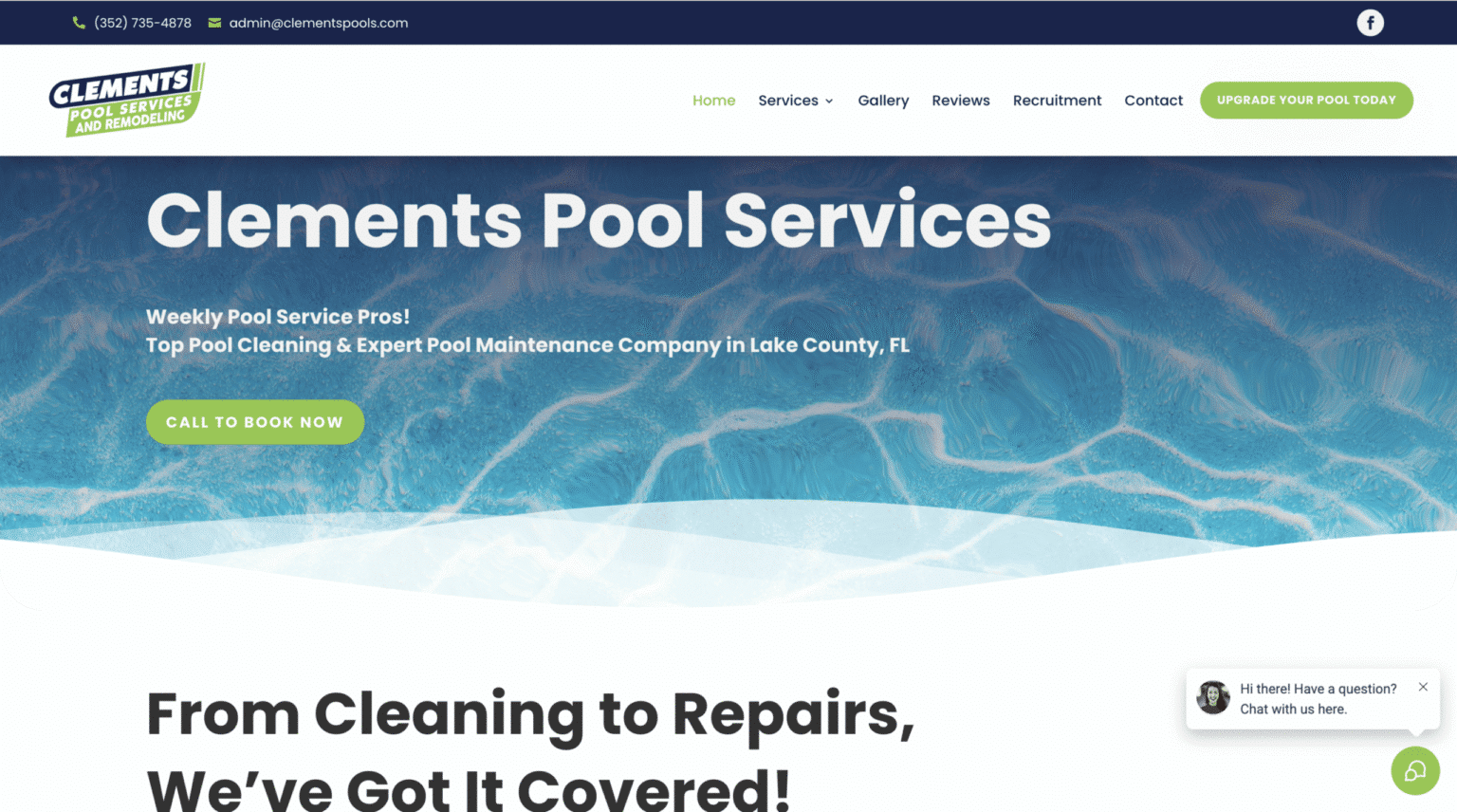
The basics are not glamorous, but they affect trust and conversion every day.
- Verify the profile and keep the phone number, hours, and website current.
- Set service areas that match where your crews actually work.
- Hide the address if customers do not visit your location.
- Ask customers for reviews based on genuine experiences, without incentives.
- Respond to reviews promptly, whether they are positive or negative.
That fourth point deserves attention. Google’s review guidance is strict on the part that many owners still get wrong. Reviews must reflect genuine experiences, and incentives are prohibited. You can ask customers to leave reviews. You can use a Google review link or QR code. You should respond promptly. But a gift card, discount, or prize drawing tied to the review is not acceptable.
In real life, the best review collection systems are the simplest. The technician finishes the job, the office sends a follow-up text or email, and the request is direct and courteous. No scripting marathon. No manipulative wording. Just a clean ask while the experience is still fresh. Fast response matters too. A profile full of old unanswered reviews can make a company look detached, even if the craftsmanship is excellent.
Why local SEO fails on otherwise decent contractor sites
Most local SEO failures are not dramatic. They are small mismatches that stack up.
One common issue is that pages are technically available to users but not ideal for indexing because site owners accidentally block key areas or launch pages in a way that keeps search engines from accessing them. Google’s technical guidance is straightforward here: pages must be publicly accessible and not blocked if you want them indexed. That sounds obvious, but I have seen contractors redesign a site and quietly break lead pages without noticing for weeks.
Another issue is weak local specificity. A page titled “Services” with 200 words about quality workmanship is not a local landing page. A page that clearly describes a service, the area served, how to contact the company, and what practical next step to take is much stronger. This is where a contractor website that generates leads differs from one that simply exists.
A third issue is inconsistency between the website and the Business Profile. If your profile says one thing about service area or operating details and the website implies another, you create uncertainty. Search engines dislike ambiguity, and homeowners dislike it even more.
Structured data can help with clarity. Google provides local business structured data guidance that allows websites to mark up elements like hours, departments, address, geo information, phone, and more. Structured data is not a magic switch, but it gives search engines cleaner signals about your local business information. For multi-service contractors, it can be especially useful when the site has several service lines and needs clearer business context.
Mobile UX is where leads are won or lost
A contractor’s best salesperson is often a stressed homeowner holding a phone. That person is not browsing leisurely. They are trying to decide whether to trust you enough to call.
Google’s page experience guidance reinforces something contractors can feel in their own analytics and call patterns: speed is only part of the picture. Mobile friendliness matters. HTTPS matters. Avoiding intrusive interstitials matters too, especially when they interfere with the main content. A pop-up that covers the screen before a user can see your emergency water extraction page is not clever marketing. It is friction.
Core Web Vitals are still useful benchmarks because they point to the lived experience of the page. Google recommends aiming for LCP under 2.5 seconds, INP under 200 milliseconds, and CLS under 0.1. Those numbers are not just technical trivia. A slow, jumpy page feels untrustworthy. A fast, stable page feels easier to act on.
The mobile problems I see most often are surprisingly repetitive.
- Hero images that are oversized and delay the page load.
- Call buttons that exist, but sit too low on the screen.
- Forms that ask for too much before offering help.
- Layout shifts that move the button just as someone tries to tap it.
- Pop-ups that block the content on first visit.
This matters across every trade named in your marketing. A plumbing website design needs immediate contact pathways because many visitors have an urgent problem. An electrician website design should make service availability and next steps obvious on a phone. A solar company website design may involve a longer journey, but the initial mobile experience still has to be clean and low-friction. A kitchen and bath remodeling website design can support richer project galleries and inspiration content, but the pages still need to load well and behave predictably.
There is no contradiction between strong branding and strong conversion. The best contractor sites do both. They look credible and they remove hesitation.
The best lead pages do not try to say everything
Contractors often over-explain the company and under-explain the job the customer needs done.
A good service page does not need hype. It needs relevance. If someone lands on a page for panel upgrades, slab leak repair, crawl space stabilization, smoke damage cleanup, or custom fence installation, the page should quickly confirm they are in the right place. Then it should make contact easy.
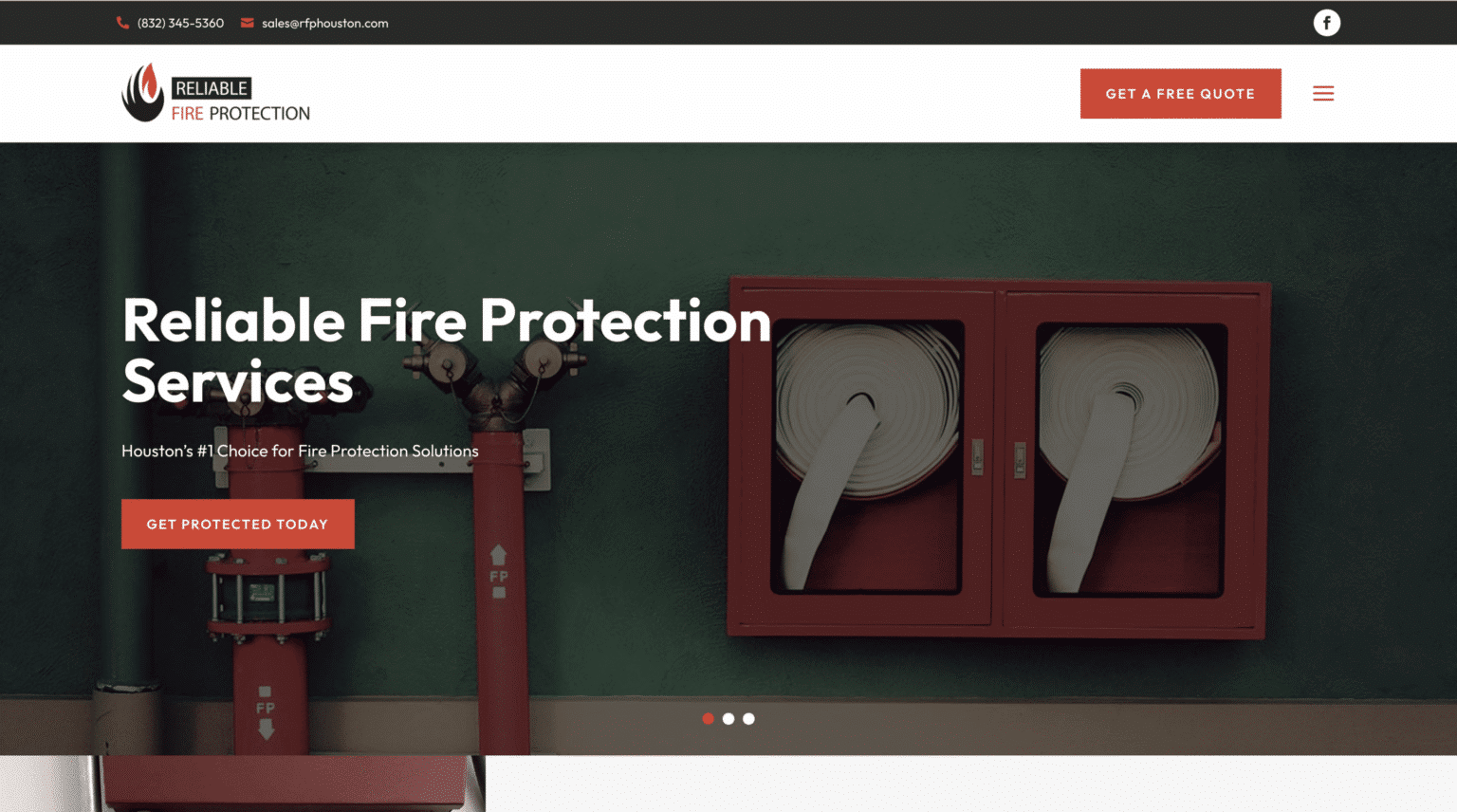
This is where websites lose discipline. Teams add long mission statements, generic process graphics, and stock phrases about quality and integrity. None of that is inherently harmful, but it cannot crowd out the practical information the visitor came for.
On a contractor lead generation website, the order of information matters. The visitor needs to know what you do, where you do it, how to reach you, and what to expect next. The best pages make that obvious without making the user work for it.
That can be expressed differently by trade. Water damage restoration pages need urgency and immediate access to contact. Remodeling pages can support more proof and project context because the buying cycle is longer. Foundation and structural pages often benefit from extra reassurance because homeowners may be anxious and unfamiliar with the process. But the principle holds: clarity beats volume.
Calls are leads only if someone handles them well
This is the part many website discussions skip, even though it directly affects performance. Google’s lead handling guidance around local service advertising makes a broader point that applies far beyond paid leads: missed-call handling matters, and quick replies matter. If a prospect calls and no one picks up, the website did not truly fail, but the business still lost the moment.
I have watched owners obsess over rankings while their front desk lets calls roll to voicemail during lunch, after hours, or when one office manager gets overloaded. The site can do its part, but speed to response still determines outcomes. If you advertise heavily, improve your local visibility, and then do not answer promptly, you have simply scaled your leakage.
For that reason, your website strategy and your operations strategy cannot live in separate rooms. If the site is designed to generate calls, the business needs a plan to answer them, return them quickly, and route them appropriately. That is not glamorous marketing advice. It is profitable advice.
What 2026 changes, and what it does not
The fundamentals are not changing as much as people think. Search tools evolve, interfaces shift, and consumer expectations keep rising, but local service lead generation still rewards businesses that are accurate, accessible, and easy to trust.
What is changing is the margin for error. Homeowners compare faster. Phones expose every bit of friction. A weak mobile experience is more costly than it used to be. A neglected profile stands out more. Generic service pages feel thinner every year because users are better at filtering fluff.
That is why local SEO for home service businesses has to be integrated with design and operations. You cannot bolt it on later. If you are planning a new site, or reworking an old one, think less about chasing trends and more about making the system coherent.
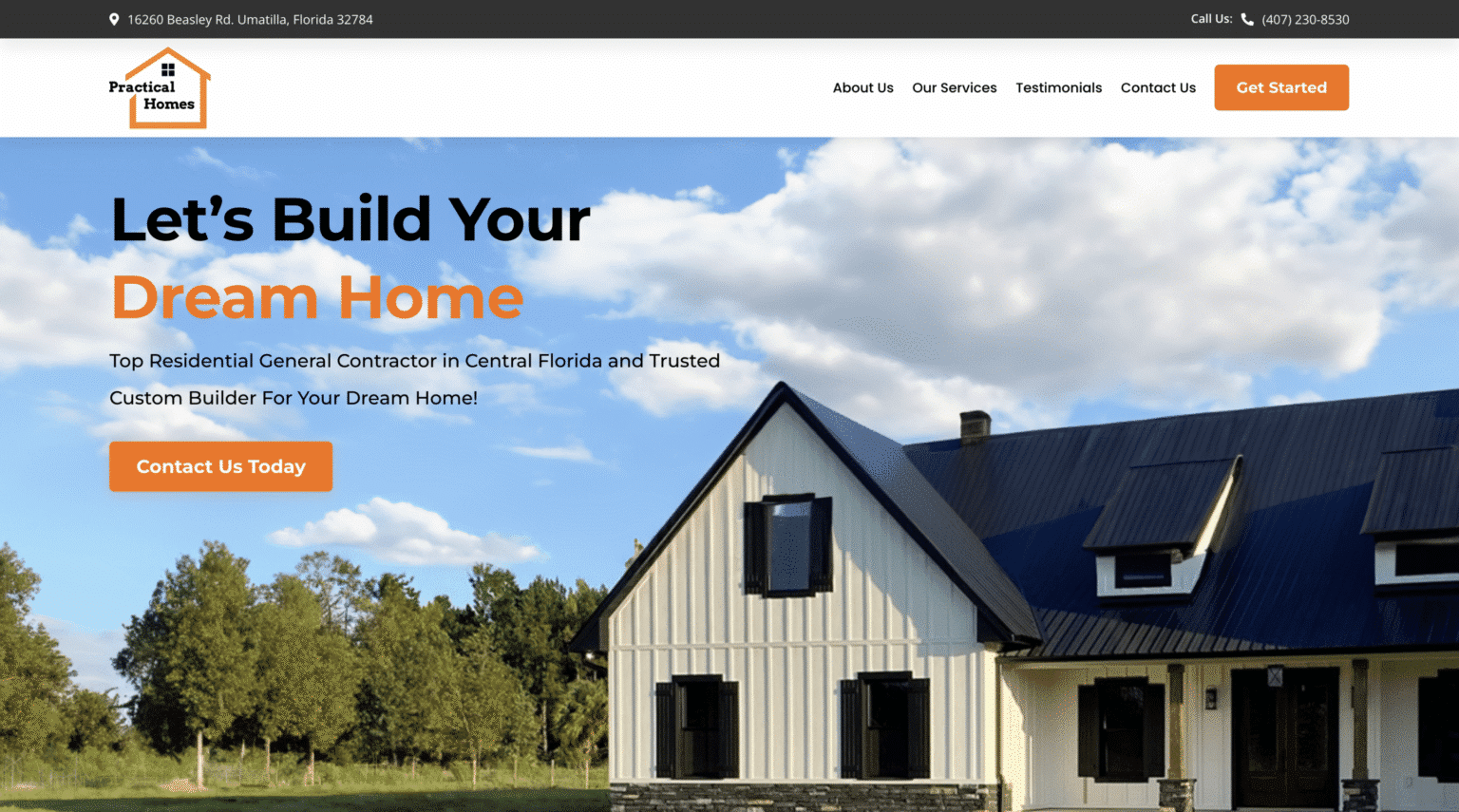
A contractor website that generates leads usually gets the boring things right. The business profile is verified read more here and accurate. Service areas are specific and truthful. Reviews are requested ethically and answered promptly. Pages are accessible for indexing. Mobile performance is treated as a business issue, not just a developer issue. Contact pathways are visible and easy to use.
A practical standard for evaluating your current site
If you want a realistic audit standard, do not start by asking whether the site looks modern. Ask whether it behaves like a dependable local sales tool.
Can a homeowner tell within seconds that you offer the service they need and serve their area? Can they tap to call without hunting for the button? Does the page load quickly enough on mobile that they do not bounce? Does your Google Business Profile support the website with accurate service area and business information? Are your reviews coming from genuine customer experiences, and are you responding to them? Are the key pages public and accessible so search engines can index them? Does your site provide clean local business signals through structured data where appropriate?
That is the standard that matters.
For a plumbing company, that might mean stripping away decorative clutter and putting emergency contact first. For an electrician, it might mean clarifying service categories and tightening mobile pathways. For a foundation repair company, it may mean improving page trust and local specificity. For restoration firms, urgency and response clarity often decide the outcome. For remodelers, it often means balancing inspiration with clear conversion routes. For fence and solar contractors, local proof and service area precision usually carry more weight than flashy design.
Different trades, same principle: the website should reduce uncertainty and help the prospect act.
The contractors who win local leads are usually the clearest
You do not need the most elaborate site in your market. You need the clearest one. Clear about service. Clear about geography. Clear about trust signals. Clear about what happens next.
That clarity should extend into your Google Business Profile for contractors, your review process, your technical setup, and your mobile experience. When those pieces line up, the site starts doing what owners actually hoped it would do all along: bring in qualified local opportunities instead of vague traffic reports.
For 2026, that is the strategy worth backing. Not more pages for the sake of pages. Not broader service claims than your crews can support. Not a prettier homepage that loads slowly on the devices your customers actually use. Build a contractor lead generation website around accurate local intent, maintain the profile that feeds discovery, and make the mobile path to contact effortless.
That is how more clicks become more calls, and how more calls become more booked work.